Self-awareness
Understand how posture, gaze, voice, movement and use of space may affect the people around you.
 ListenAdapt
BODY LANGUAGE WORKSHOPS FOR LEADERS AND TEAMS
Much of what happens between people is communicated without words. ListenAdapt helps leaders and teams become more aware of the signals they send, notice what changes in others and adapt their behaviour in the moment.
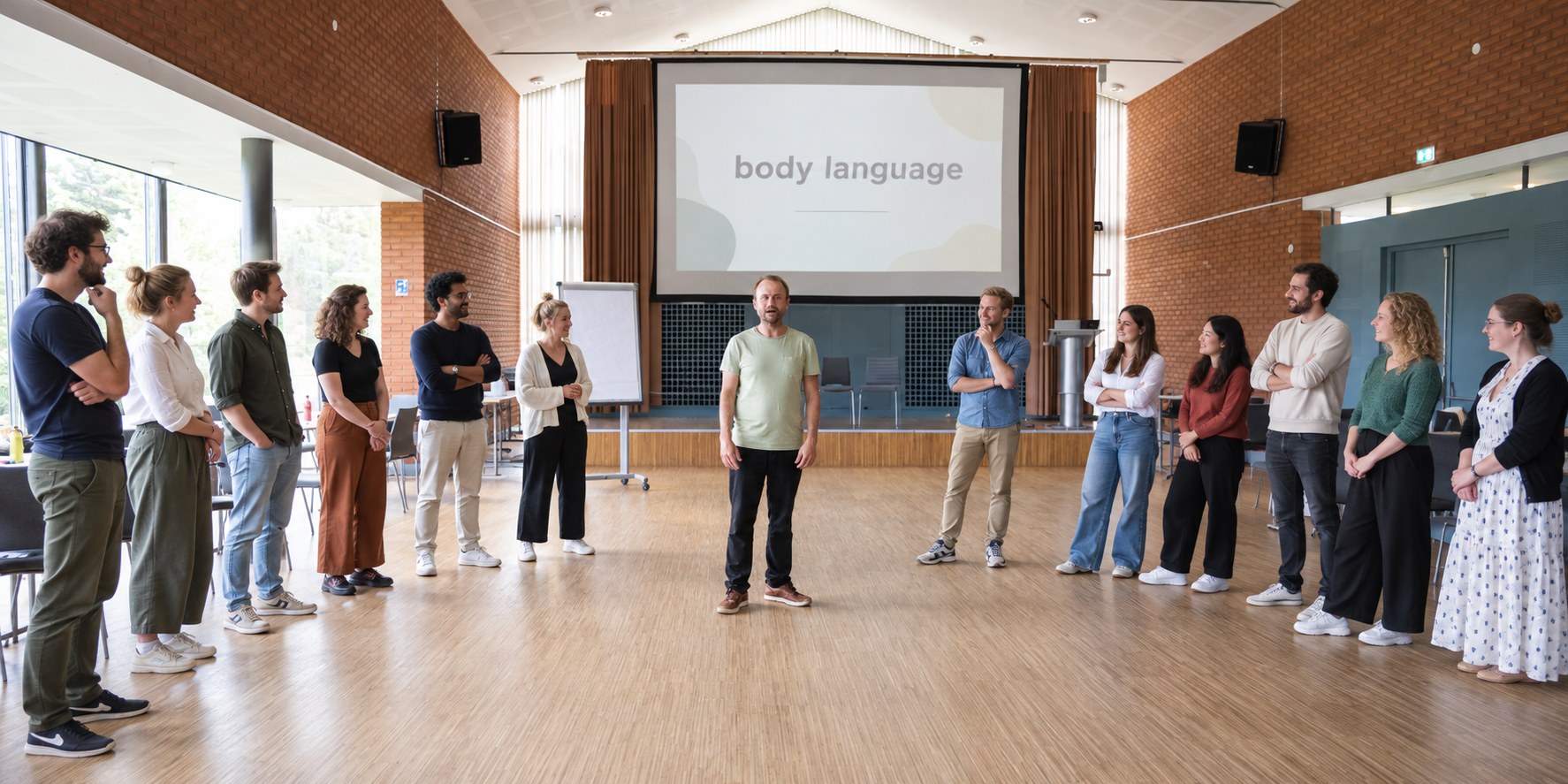
Some visual details have been altered with AI to protect participant privacy.
NOTICE MORE. ASSUME LESS.
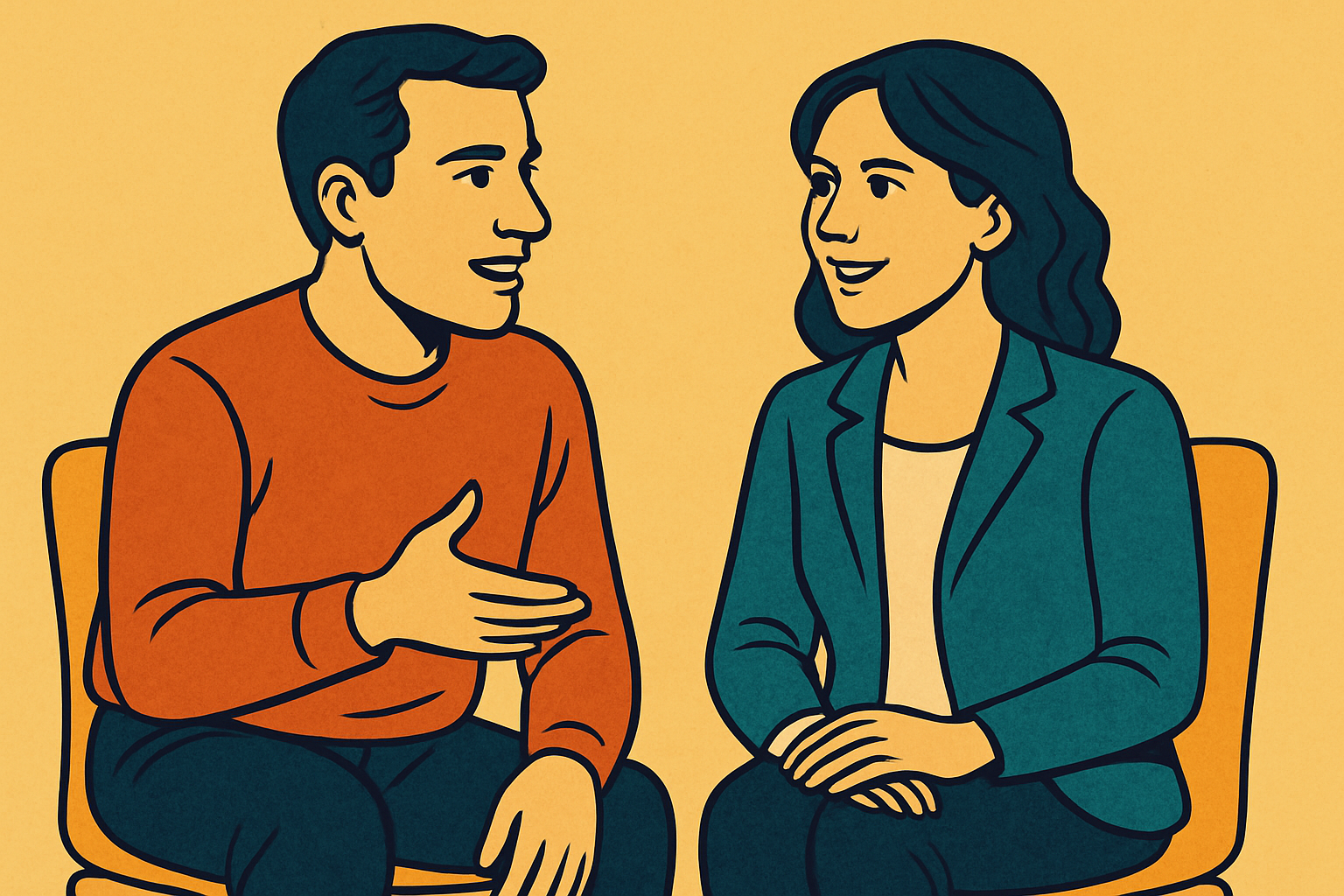
What do you notice in this interaction?
Illustration created with generative AI.
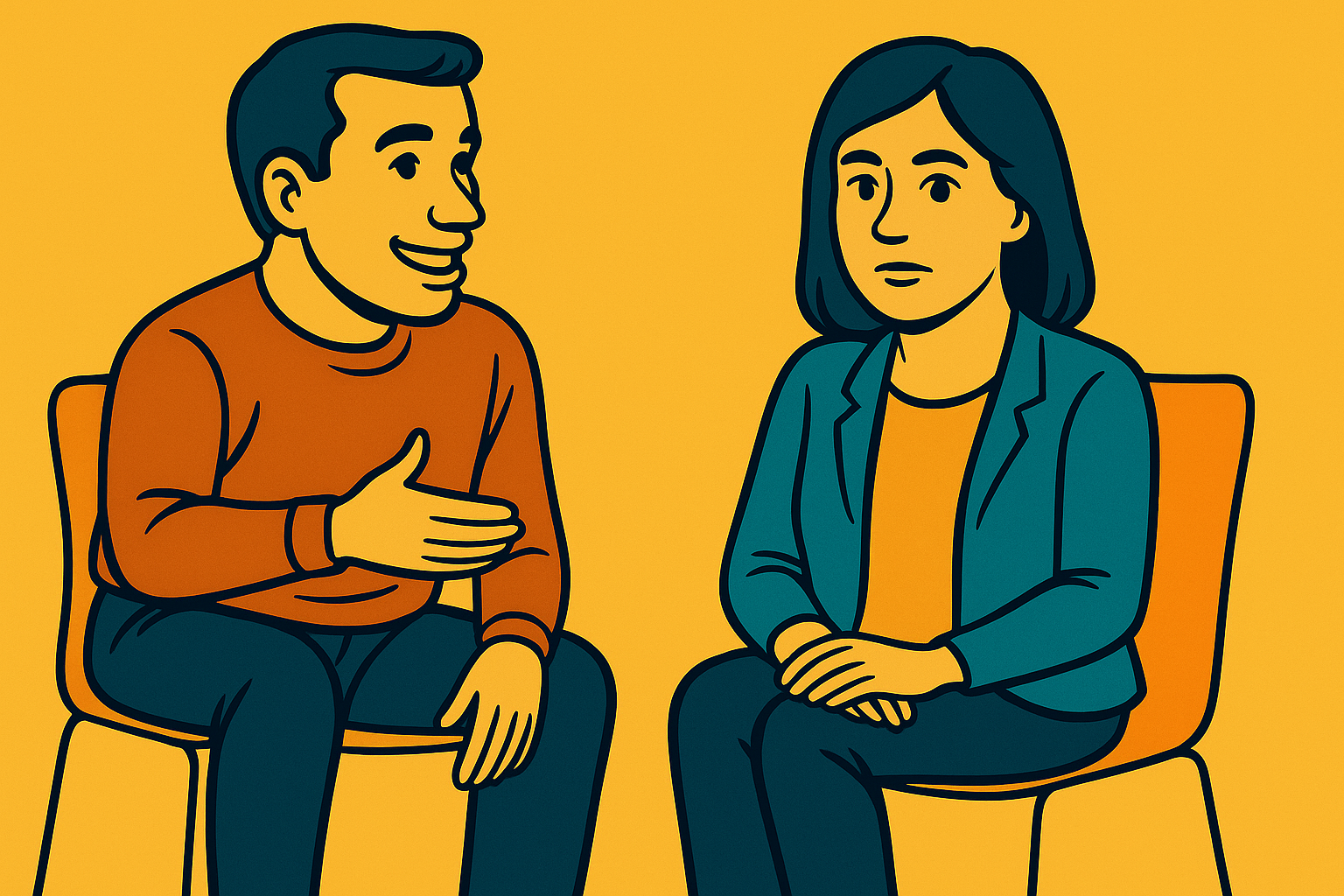
What changes, and what are you reading into it?
Illustration created with generative AI.
BEYOND WORDS
Body language shapes how people experience leadership, trust, respect and connection. In meetings, difficult conversations and presentations, people continuously respond to posture, gaze, facial expression, movement, voice and physical distance, and often without consciously noticing it.
The goal is not to memorise what individual signals supposedly mean. It is to notice more, recognise your own habits and respond more deliberately to the people and situation in front of you.
WHAT PARTICIPANTS PRACTISE
Understand how posture, gaze, voice, movement and use of space may affect the people around you.
Notice changes in expression, attention and interaction without jumping too quickly to conclusions.
Experiment with presence, openness, confidence and authority as situations and relationships change.
Notice nonverbal signals that can invite contribution, or make speaking up feel more difficult. Practice positive behaviours.
Make more deliberate room for different communication styles and ways of participating. Notice everyone; include everyone.
Practise presence when pressure, disagreement, evaluation or authority enters the room.
HOW IT WORKS
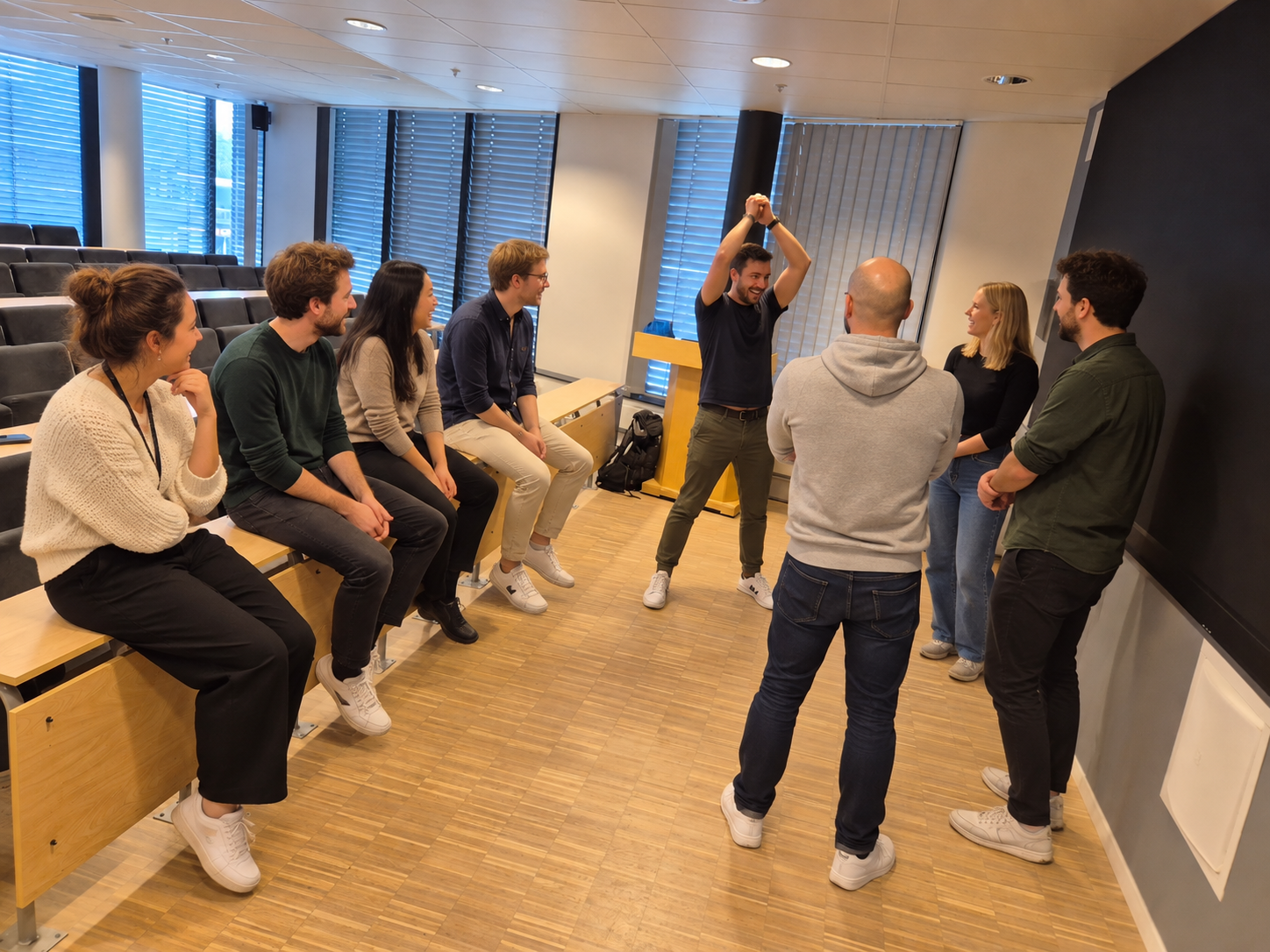
Nonverbal behaviour is embodied. Participants therefore work actively with interaction: noticing what happens, experimenting with different choices and connecting the experience to situations they actually face at work.
PSYCHOLOGICAL SAFETY, RESPECT & INCLUSION
Psychological safety is not created by words alone. Attention, eye contact, interruptions, physical orientation, tone of voice and use of space can influence whether others feel heard, respected and able to contribute.
People continuously read the social environment for cues about whether it is safe to speak, disagree, ask a question or make a mistake.
Nonverbal awareness helps leaders notice how their own presence may encourage contribution, or unintentionally close it down.
People differ in how they communicate, express confidence and respond to status or authority. Better observation can help us make fewer assumptions and create more room for different ways of participating.
Participants practise attention, listening and behavioural flexibility, then reflect on how small choices can affect trust, contribution and collaboration.
FLEXIBLE WORKSHOP FORMATS
Every engagement is adapted to the participants and the situations where nonverbal communication matters most.
2-3 hours introducing nonverbal awareness, interaction and practical experimentation.
Deeper work with leadership, communication, status, psychological safety and relational dynamics.
Several sessions combining practice, reflection and transfer to real workplace situations.
Suitable for leadership teams, departments, client-facing teams and sales personnel, advisors and consultants, educators, conferences and other communication-intensive roles.
POWER, STATUS & INTERACTION
People continuously negotiate who speaks, who takes space, who receives attention and whose ideas are followed. Nonverbal behaviour is part of those dynamics.
Research links gaze, posture, movement, voice and other behaviours with power, dominance and status, but these are not simple signals with universal meanings. Context matters.
Explore psychological safety →FREQUENTLY ASKED QUESTIONS
A practical learning experience where participants explore nonverbal behaviour through observation, embodied exercises, reflection and experimentation.
No. The aim is to notice more without treating individual gestures as a dictionary. Context, relationships and individual differences matter.
Yes. Exercises and examples are adapted to the participants and situations where communication, presence, leadership or collaboration matter most.
Sessions can be designed for groups from approximately 5 to 100 people while keeping participation active and reflection useful.
Formats range from a focused two-hour introduction to full-day workshops or multi-session development programmes.
START A CONVERSATION
Tell Marius about the situations your leaders or teams need to handle better, and he will suggest a practical workshop built around them.
Discuss your challenge