Generate more possibilities
Practise divergent thinking by moving beyond the first obvious answer and producing multiple directions before evaluating them.
 ListenAdapt
INNOVATION & CREATIVITY WORKSHOPS
Research-informed, experiential workshops help teams generate more ideas, challenge habitual thinking and collaborate better when the answer is not obvious.
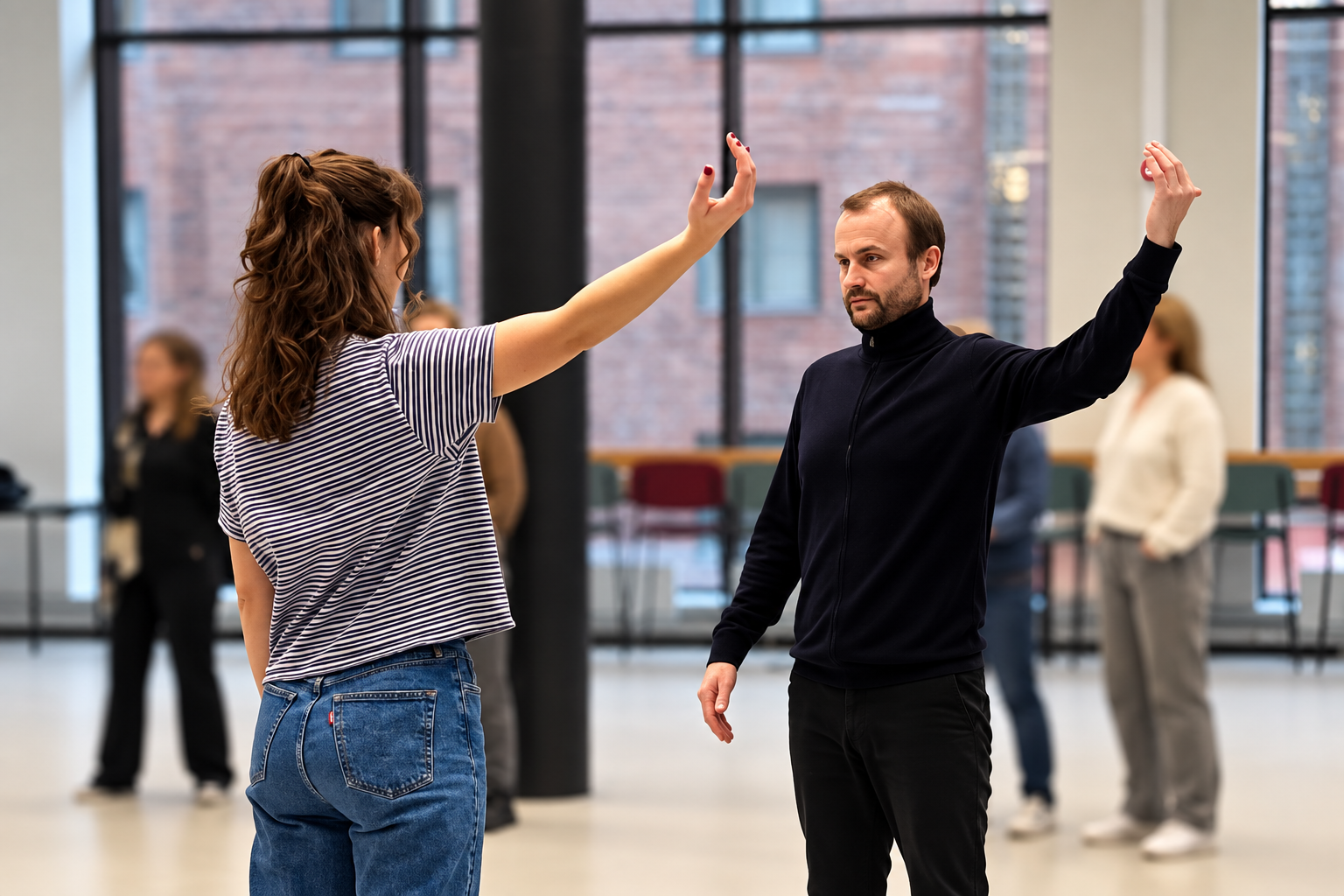
INNOVATION IS A TEAM PRACTICE
“Innovation depends on how people listen, build and respond when the next step is still unclear.”
“Creativity becomes useful when a team can turn possibilities into shared direction.”
WHEN THE ANSWER IS NOT OBVIOUS
Many teams want more innovation, but the challenge is rarely a lack of ideas alone. Innovation depends on whether people can explore uncertainty, contribute unfinished thinking, build on one another’s input and make choices without waiting for a perfect script.
ListenAdapt uses applied improvisation to make these capabilities practical and observable. Participants generate possibilities, respond to new information, test assumptions and practise moving from creative exploration toward collective action.
WHAT TEAMS PRACTISE
Practise divergent thinking by moving beyond the first obvious answer and producing multiple directions before evaluating them.
Listen for what others offer and develop emerging ideas instead of correcting, blocking or competing too quickly.
Use constraints, unexpected inputs and new perspectives to loosen familiar patterns and open up alternative solutions.
Try, notice and adjust rather than waiting for complete information—building confidence in iterative action.
Respond constructively to unfinished ideas and mistakes so that more perspectives and possibilities enter the room.
Shift from exploration to clearer choices, priorities and next steps without shutting creativity down too early.
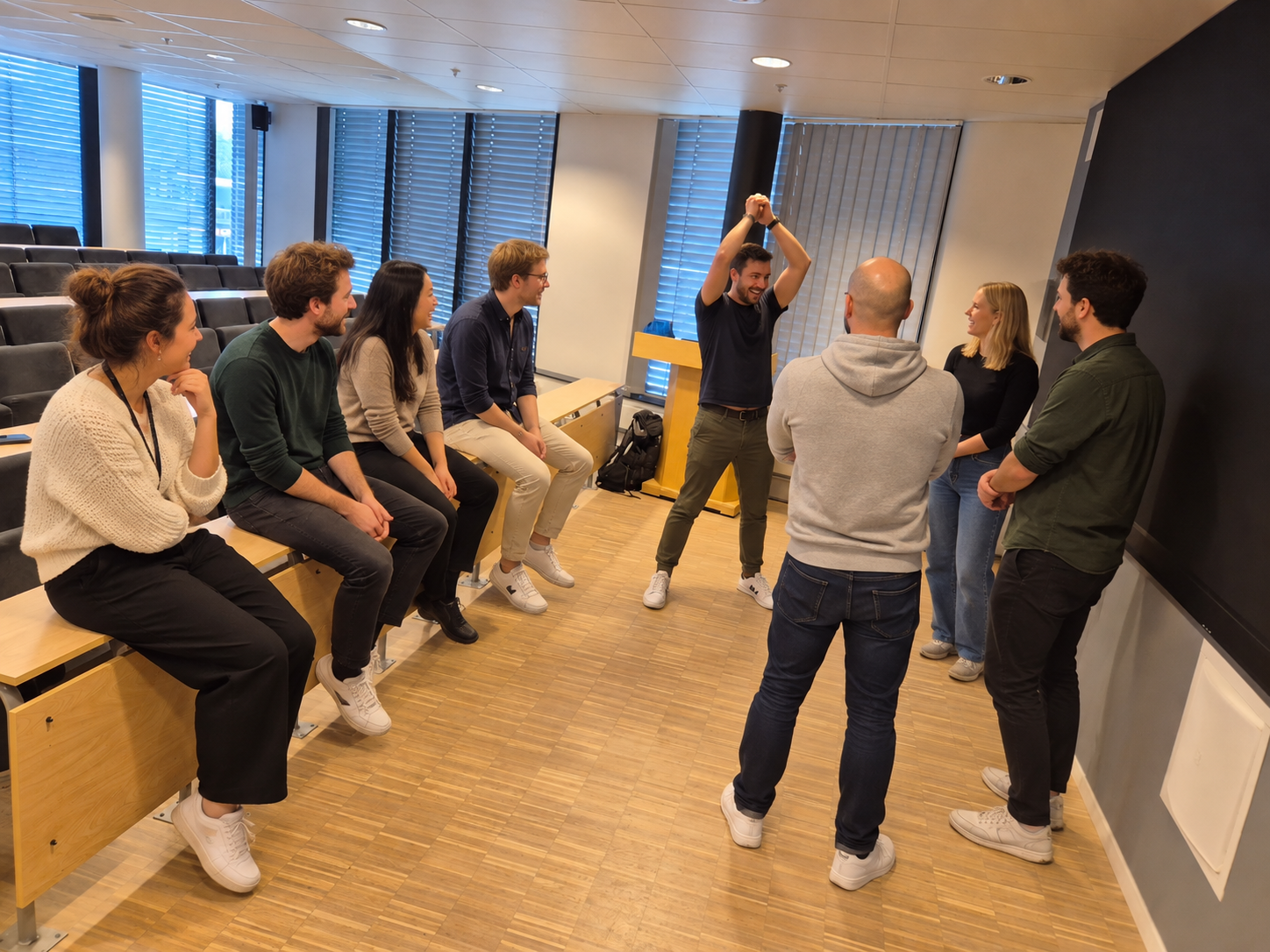
HOW IT WORKS
Participants work through carefully framed exercises that surface habits in idea generation, collaboration and decision-making. The group reflects on what happened, connects the experience to current innovation challenges and tests alternative ways of working together.
INNOVATION NEEDS PSYCHOLOGICAL SAFETY
Innovation asks people to contribute before they know whether an idea will work. That makes the social conditions around experimentation just as important as the idea itself.
Teams generate fewer useful possibilities when people self-censor, protect status or wait for certainty. Psychological safety makes it easier to ask questions, suggest unfinished ideas and learn from attempts that do not work.
This does not mean avoiding disagreement or lowering standards. It means creating enough interpersonal safety for candid contribution, constructive challenge and intelligent risk-taking.
Applied improvisation gives teams repeated, embodied practice in accepting new information, building on contributions, recovering from mistakes and adapting together—behaviours that support both psychological safety and innovation.
Creativity is the capacity to generate and connect possibilities. Innovation is the work of developing those possibilities into something useful. Psychological safety helps more of that creative potential enter the process in the first place.
FLEXIBLE WORKSHOP FORMATS
Every engagement is adapted to the group, context and kind of innovation capability you want to strengthen.
One to three hours for a defined theme, conference session, innovation day or team development event.
A half or full day combining creative practice, reflection and direct application to current work.
Multi-session work supporting deeper practice in experimentation, collaboration and innovation over time.
For leadership teams, innovation teams, departments and organisation-wide groups of approximately 5–100 participants.
RESEARCH & PRACTICE
Marius Opheim Thomassen researches applied improvisation, embodied learning and nonverbal behaviour at Kristiania University College and brings that work into practical organisational development.
The innovation and creativity approach combines practical improvisation exercises with reflection on divergent thinking, collaboration, uncertainty and the social conditions that help ideas develop.
Explore psychological safety workshops →FREQUENTLY ASKED QUESTIONS
A facilitated learning experience where teams practise behaviours that support idea generation, experimentation, collaboration and creative problem-solving.
No. Exercises are introduced gradually and framed around workplace learning. Participants are not expected to perform comedy or entertain one another.
Yes. The format, examples and exercises are adapted to your organisation, participants and the innovation challenge you want to work on.
Sessions can be designed for groups from approximately 5 to 100 people, with formats that support active participation and useful reflection.
Formats range from a focused one-hour introduction to full-day workshops or multi-session development programmes.
START A CONVERSATION
Share the challenge, the team and the change you want to support. Marius will respond personally with an initial suggestion for a relevant workshop format.
Discuss your challenge